
Why Tweens Need More Creative Tech (Not More Screens)
Kids today are surrounded by screens.
Phones. Tablets. Streaming. Social media. Gaming. Group chats.
Screens aren’t inherently bad. They connect, entertain, and even educate. But when tweens spend most of their time consuming technology instead of creating with it, something important gets lost.
The real magic happens when they shift from scrolling to building.
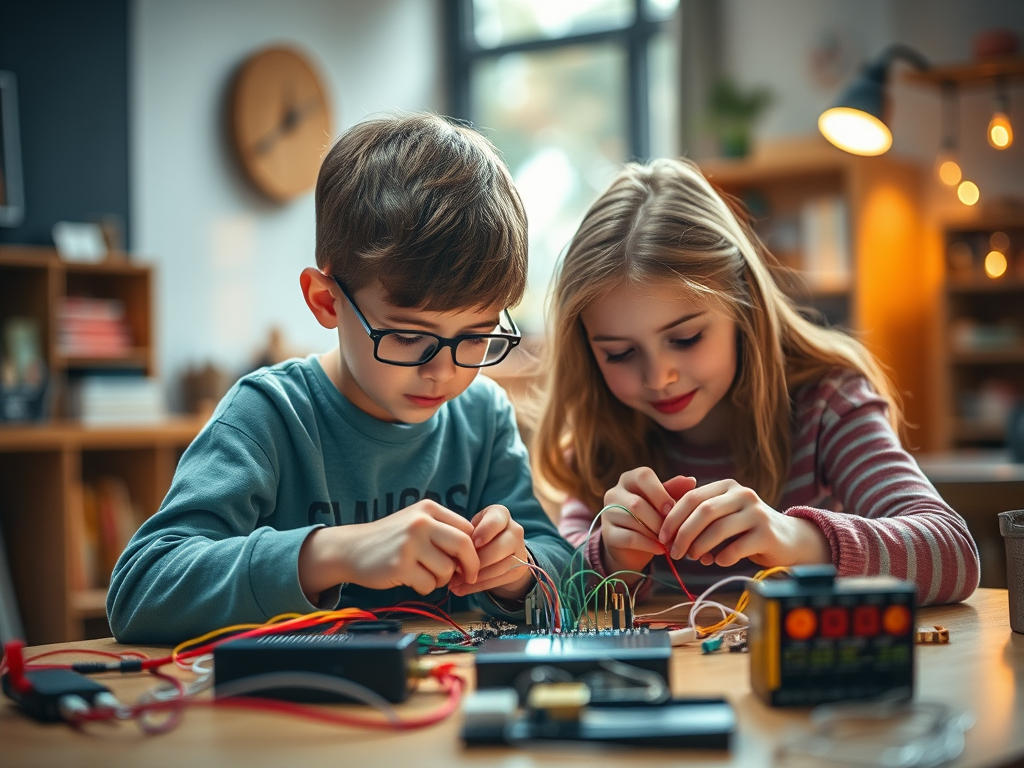
Creative tech — like designing, wiring, coding, constructing, or experimenting — transforms technology from passive entertainment into active empowerment.
Here’s why that shift matters so much during the tween years.
1. Creativity boosts resilience
Scrolling is easy.
Building is not.
When a tween creates something — a light-up sign, a simple circuit, a small gadget, a design that doesn’t work the first time — she faces small, manageable challenges.
And when she works through them, she builds resilience.
Resilience doesn’t come from consuming perfect content.
It comes from:
- Trying
- Adjusting
- Troubleshooting
- Trying again
Each time she fixes a loose wire or redesigns a structure, she learns:
“I can figure this out.”
That confidence is deeper and more lasting than any digital reward or like count.
2. Hands-on tech builds real skills
Creative tech isn’t just fun — it builds foundational skills.
When a tween:
- Wires a simple circuit
- Tests a moisture sensor
- Programs a light sequence
- Designs a glowing wall sign
- Builds a moving structure
She’s developing early engineering thinking.
She learns:
- Cause and effect
- Systems thinking
- Logical sequencing
- Spatial awareness
- Problem-solving
These are the foundations of engineering, architecture, environmental science, product design, robotics, and more.
Even if she never chooses a STEM career, these skills transfer everywhere.
Creative tech teaches her how systems work — and how she can influence them.
She’s curious. You can guide her.
Join the newsletter for simple ways to spark her love for STEM — through inspiration, stories, and ideas you can use right away.
3. Creative tech lowers stress
The tween years are emotionally intense.
Friendships shift.
Bodies change.
Social awareness increases.
Comparison becomes louder.
Passive screen time often adds to this pressure — especially when it involves social media.
Hands-on tech projects do the opposite.
They:
- Anchor attention
- Provide focus
- Offer tangible progress
- Create a sense of completion
Building something physical calms the nervous system in ways scrolling cannot.
There’s something regulating about using your hands, solving a problem, and seeing a real-world result.
It turns anxious energy into constructive energy.
4. Creative tech taps into identity
Identity formation accelerates in the tween years.
Kids start asking silently:
Who am I?
What am I good at?
Where do I fit?
When a girl builds something that lights up her room or solves a small problem, she starts to see herself differently.
Not just as someone who uses tech.
But as someone who creates it.
That internal shift matters.
Instead of:
“I’m not a math person.”
She might think:
“I’m good at figuring things out.”
Instead of:
“Tech is for other kids.”
She might think:
“I’m a maker.”
That identity — capable, creative, inventive — stays.
5. It reduces comparison pressure
Screens often amplify comparison.
How do I look?
How many followers?
Am I as funny, stylish, smart as them?
Creative tech changes the measuring stick.
With hands-on projects, the questions become:
- Does it work?
- How can I improve it?
- What would happen if I changed this?
The focus shifts from appearance to functionality.
From performance to experimentation.
From social validation to personal mastery.
That shift is powerful.
Because when kids measure themselves by what they can build — not how they appear — confidence grows from the inside out.
The Bigger Shift: From Consumer to Creator
The goal isn’t to eliminate screens.
It’s to rebalance them.
Instead of only watching videos about inventions…
She can build one.
Instead of only playing games…
She can design something interactive.
Instead of only following trends…
She can create something original.
Creative tech gives tweens ownership.
Ownership builds confidence.
Confidence builds courage.
Courage shapes futures.
The real magic isn’t in more screen time.
It’s in more creation time.
And when tweens discover they can build, design, and problem-solve — they don’t just use technology.
They begin to imagine shaping the world with it.

She’s curious. You can guide her.
Join the newsletter for simple ways to spark her love for STEM — through inspiration, stories, and ideas you can use right away.
Latest from the Blog
-

Why Kids Think STEM Is Difficult (And How Hands-On Learning Makes It Fun and Engaging)
How Do We Change the Perception That STEM Is “Too Hard”? Somewhere along the way, a lot of kids start to believe the same thing: STEM is hard.STEM…
-

Why Hands-On STEM Learning Helps Kids Understand Faster and Remember Longer
The Moment Everything Changes in Learning There’s a moment you can actually see when it happens. It’s when a student stops asking:“Why do I need to know this?”…
-

STEM Isn’t About Being Smart — It’s About Being Curious
For a long time, STEM has been framed as something only “smart kids” do.The kids who raise their hands first.The kids who finish worksheets the fastest.The kids who…
-

What Makes a STEM Kit Actually Educational?
STEM kits are everywhere — on store shelves, in gift guides, and all over social media feeds. They promise to spark curiosity, build skills, and inspire the next…
-

How Displaying Kids’ Projects Boosts Their Motivation to Learn STEM
If you’ve ever watched a child proudly show off something they made — a drawing, a Lego build, a poster, a craft — you already know the power…
Latest updates
-
Update #5: Designing for Moms + Daughters (and Future Paths)
What we’re working on Designing the shared experience that connects building together with exploring future career paths. Why it matters This isn’t just about spending time together —…
-
Update #4: What We’re Building First
What we’re working on Deciding which career paths and skills to introduce first through our earliest kits. Why it matters The first kits don’t just teach how to…
-
Update #3 — The Big Idea: STEM That Stays
What we’re working on Clarifying what makes STEM That Stays fundamentally different from other STEM kits. Why it matters Most STEM kits focus on doing an activity. STEM…
-
Update #2: The Problem With Most STEM Kits
What we’re working on Understanding why so many STEM kits don’t actually stick. Why it matters Most kits are fun for an afternoon—and forgotten by the next week.…

Follow the Journey
Join the mail list to see new updates and get early access when we launch!